
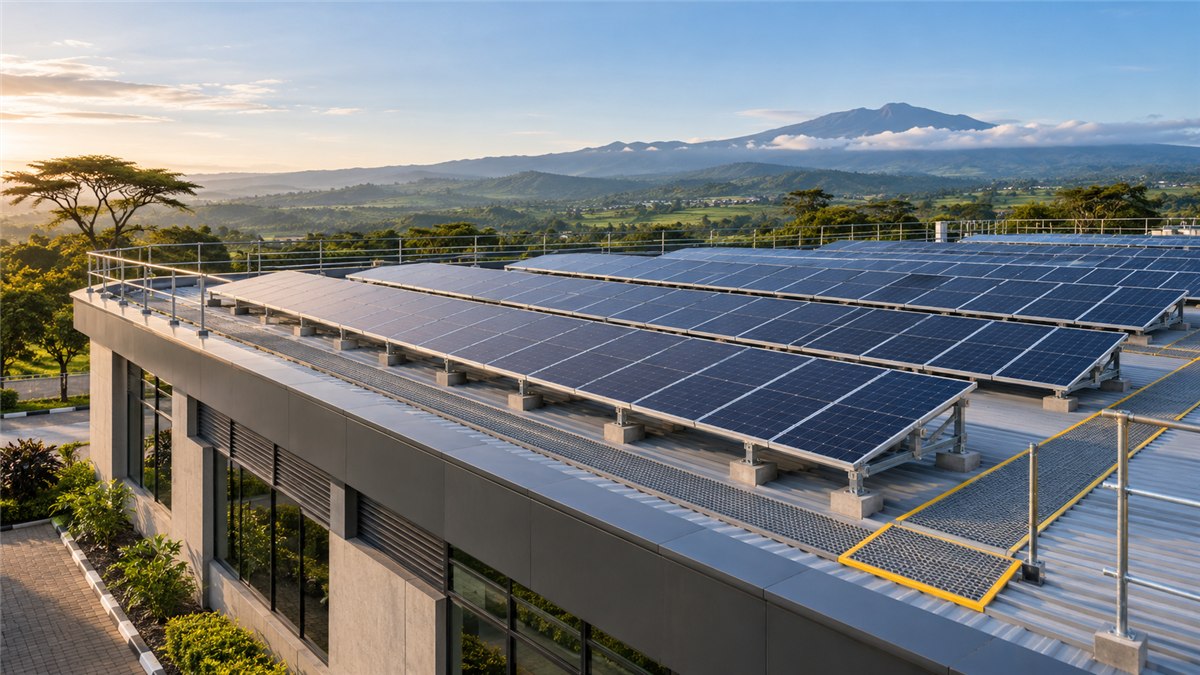
Evaluate the installed roof system.
Module weight is only one input. A roof proposal needs to account for modules, mounting or adhesive, cables, access routes and the relevant structural and weather loads. A lightweight module does not establish roof suitability on its own.
Keep panel-only weight separate from installed loading.
Assume a 500 m² module area. Product A weighs 3 kg/m² and Product B weighs 12 kg/m²: panel-only masses are 1,500 kg and 6,000 kg. The 4,500 kg difference does not establish allowable roof load or installed-system mass. Mounting, ballast if used, load distribution and the structural assessment still matter.
Compare mounting choices against the roof.
| Decision | Flexible module approach | Rigid module approach |
|---|---|---|
| Attachment | Confirm approved bonding or fixing method and substrate | Confirm clamps, rails, penetrations or ballast design |
| Roof warranty | Confirm compatibility and installer obligations | Confirm roofing interfaces and waterproofing responsibility |
| Heat and ventilation | Review the specified installation thermal conditions | Review rear ventilation and mounting clearances |
| Replacement | Plan removal without unacceptable roof damage | Plan safe access and compatible replacement hardware |
| Evidence | Match test documentation to the exact assembly | Match test documentation to the exact assembly |
Check electrical fit as carefully as mechanical fit.
Match string voltage and current to inverter input limits using the project temperature range. Review cable routing, connectors, isolation and access. Confirm shading and usable roof area before treating gross roof area as generating area. Equipment selection must follow the site design and applicable local requirements.
Use a staged decision process.
| Stage | Decision gate |
|---|---|
| Roof review | Condition, remaining life and structural assessment |
| Mounting review | Approved attachment, waterproofing and warranty compatibility |
| Electrical design | Module/inverter compatibility and connection scope |
| Commercial comparison | Installed scope, expected yield assumptions and maintenance |
| Acceptance | Inspection, commissioning records and as-built documentation |
Sources and next steps.
The U.S. DOE PV installation and commissioning guidance covers structural, site and equipment considerations. Our numerical example is illustrative. Share a roof survey, drawings and proposed installation method when comparing lightweight flexible and rigid modules.