
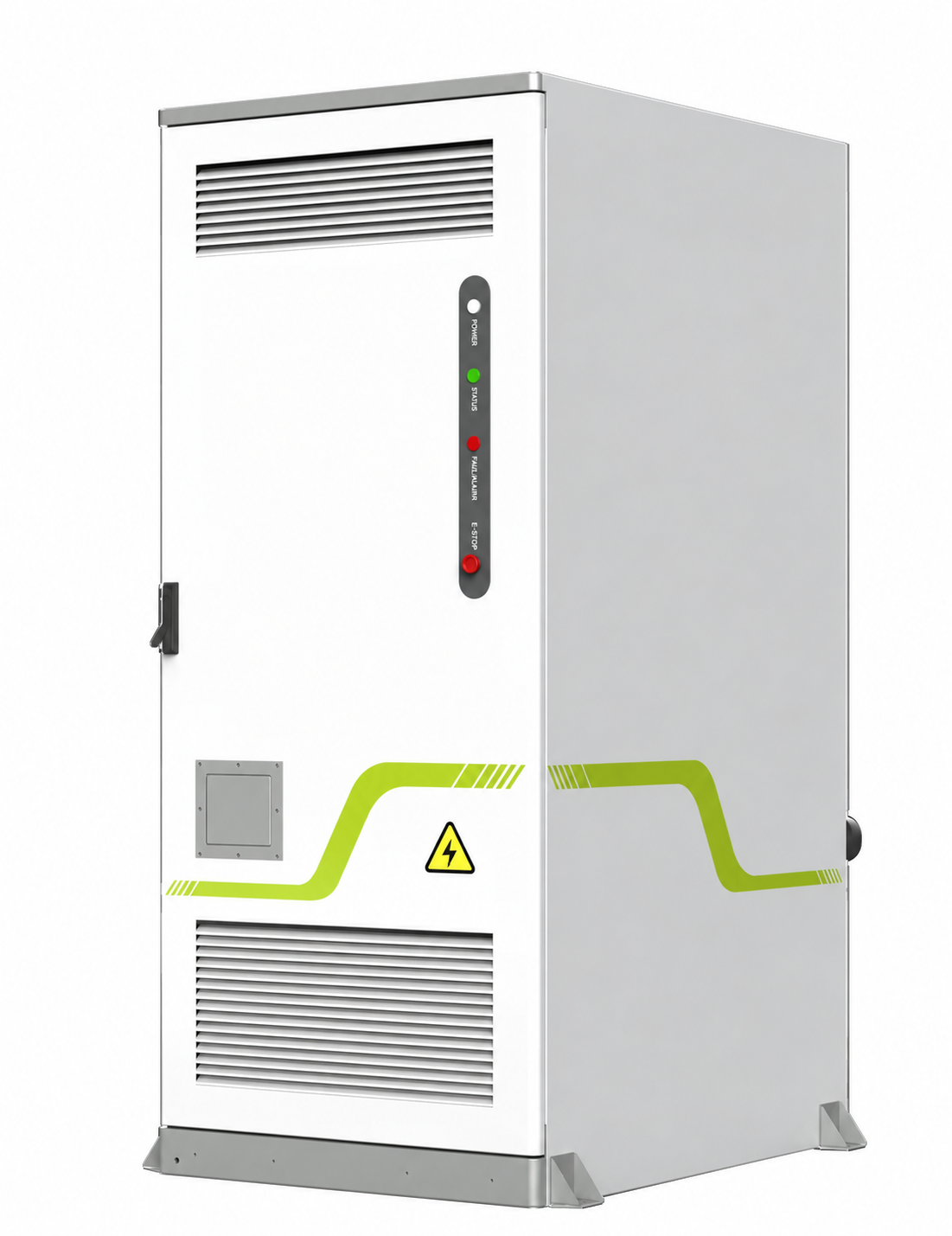
Is Kenya mainly a large-storage or small-cabinet market?
The evidence supports three separate segments: locally offered household battery systems, commercial storage products and commissioned site projects, and a utility-scale development pipeline. The reviewed official sources do not provide a consistent national installed-BESS breakdown by segment, so it would be misleading to declare cabinets or utility projects the largest installed market.
1. Read the market in three layers—not one national total
Public Kenyan listings include 51.2 V household batteries and 50 kW/61.44 kWh to 125 kW/261.2 kWh commercial examples. Offered products, not audited installed totals. [2] [3]
KenGen announced a data-centre BESS commissioning on 29 July 2025, serving its 52 kW facility. A third-party project, not a WAYTON installation or national total. [5]
What this means: private backup and self-consumption can be assessed now against site economics; utility storage follows a separate procurement, connection and revenue route. Never add a planned project to commissioned capacity. No reliable national cabinet-versus-container percentage was established.
EPRA reports 373.30 MW of captive solar as at June 2026, a relevant demand driver for examining storage behind the meter. It is a PV figure, not battery capacity, and does not mean every PV owner needs storage. [1]
2. Which products fit each Kenyan application?
| Market / application | What is offered or worth assessing | The selection trap |
|---|---|---|
| Home, small shop or office | 51.2 V LFP wall/rack batteries; modular 5.12 kWh building blocks appear in local listings | Battery energy does not establish continuous discharge power or inverter/BMS compatibility |
| Business, hotel, farm or factory | Indoor racks or integrated outdoor cabinets; local catalogue examples include 50 kW/61.44 kWh and 125 kW/261.2 kWh | An outdoor-looking cabinet is not automatically suitable for a coastal, hot or flood-exposed site |
| Data centre / critical facility | Engineered storage with a specified continuity/UPS architecture | Do not infer no-break power from “BESS” or from a large kWh number |
| Mini-grid / utility / large site | Engineered rack, container or multi-cabinet arrangements, PCS and possibly MV equipment | Container size alone does not establish usable energy, grid services or permitted operation |
Local examples establish supply availability only. Confirm whether a quoted cabinet includes the PCS, EMS, switching and fire-safety scope. An energy-only battery cabinet and an AC-integrated system are not directly comparable. [2] [3] [4]
3. Why 48 V-class batteries and high-voltage systems both matter
The DC current behind a 10 kW example
A modular low-voltage battery can suit a small compatible inverter, but higher power raises current and installation demands. A high-voltage system reduces current for the same power but requires the correct PCS, BMS, insulation, protection and service capability. These systems are not interchangeable.
Ask for continuous and peak current at the lowest permitted battery voltage, not just a “5 kWh battery” label. Define parallel limits, communications and usable energy at the stated conditions.
4. Decide whether the battery is buying time, energy or flexibility
| Duty | Evidence to collect | Equipment / control consequence |
|---|---|---|
| Outage resilience | Critical-load kW, starting loads and outage duration | PCS surge/phase capability, usable kWh, reserve SOC and a safe island/transfer arrangement |
| Capture solar surplus | Measured export/surplus profile and evening demand | Charging power, usable cycling window, losses and export-control integration |
| Manage an electricity bill or supply limit | Actual tariff components, peak demand and connection agreement | EMS dispatch and meter integration; savings cannot be inferred from energy price alone |
| Grid services / utility duty | Approved project scope, connection requirements and service contract | Plant-level controls and tested performance; not a standard cabinet feature |
kW + starting demand
Usable AC kWh
PCS + controls + approvals
For illustration, 125 kW / 261 kWh is about 2.1 hours at nameplate energy and rated power before usable-SOC limits, conversion losses, auxiliaries and ageing. It is not a guaranteed two-hour backup system for every 125 kW load.
The 50%-of-exported-unit credit in Kenya’s 2024 net-metering rules makes self-consumption worth modelling, but does not by itself prove a battery pays back. Compare round-trip losses, degradation, reserve and capital/service cost against the actual utility agreement. [8]
5. Kenya-specific controls and approvals belong in the purchase brief
At grid-connected sites, match the confirmed supply and utility-approved settings. Require safe behaviour on voltage/phase problems, loss of metering or communications, grid interruption and reconnection. Do not copy generic trip thresholds from a market summary: the Distribution Grid Code has dedicated energy-storage provisions as well as connection and power-quality requirements. [9]
For PV/generator hybrids, establish who controls generator start/stop, minimum loading, charging power and island operation. A black-start claim, backup switch and seamless UPS transfer are different capabilities; witness the required mode during commissioning.
Obtain model-matched IEC 62619 / IEC 63056 battery evidence and the system safety case; IEC 62933-5-2 concerns system-level hazards. UN38.3 transport evidence does not certify stationary fire safety or Kenyan site approval. Confirm KEBS conformity, installation/licensing scope, applicable county/fire requirements and the NEMA route for the actual project. [10] [11] [12] [13] [14] [15]
From market context to your project specification.
Share load and outage records, PV/generator details, desired autonomy and connection constraints. WAYTON can compare low-voltage batteries, rack systems, commercial cabinets or larger engineered packages from suitable suppliers.
Discuss your project · tech@waytonenergy.com ↗Sources & reading notes
15 primary and direct-market sources · reviewed 17 November 2026
- EPRA · Energy & Petroleum Statistics Report, year ended 30 June 2026, table 2.1 ↗Official installed-capacity data; not shipments, module-type shares or a complete small-system inventory.
- Public Kenyan supplier · 5.12 kWh / 51.2 V battery ↗Local product listing; no prices or supplier preferences reproduced.
- Public Kenyan product catalogue · commercial storage cabinets ↗Lists 50 kW/61.44 kWh and 125 kW/261.2 kWh examples. Offered equipment is not proof of market share.
- Public Kenyan product page · 125 kW / 261 kWh industrial ESS ↗A local catalogue example with high-voltage LFP storage and liquid cooling; no endorsement of unverified performance or market dominance.
- KenGen · 1.16 MWh data-centre BESS commissioning, 29 July 2025 ↗Reported commissioned project; third-party attribution, not a WAYTON case or a national total.
- KenGen · Utility BESS project profile ↗Profile describes 100 MW/100 MWh and feasibility ongoing at time of review. Planned project, not operational capacity.
- Ministry of Energy · National Energy Compact, August 2025, annex III ↗Investment pipeline; do not add it to commissioned capacity. Planning scopes and durations differ across documents.
- EPRA-hosted Kenya Law text · Net-Metering Regulations 2024, LN104, regulations 5–10 ↗Read the instrument itself: a 2025 upload title does not change its 2024 legal citation. Current utility agreement and eligibility still apply.
- EPRA · Kenya National Distribution Grid Code, March 2024 ↗Connection, power-quality and energy-storage provisions; project applicability and approved settings require confirmation.
- IEC · 62619:2022 industrial lithium battery safety ↗Battery-level technical scope, not whole-site approval.
- IEC · 63056:2020 batteries for energy storage ↗Application-specific battery safety scope.
- IEC · 62933-5-2:2025 electrochemical storage system safety ↗System-level safety scope; not a claim of universal mandatory Kenyan certification.
- UNECE · Tests and Criteria, Rev.8 and Amendment 1 ↗Transport testing, including subsection 38.3; not stationary system approval.
- KEBS · PVoC Manual v14 ↗Import conformity framework; confirm the current route for the actual product, consignment and origin.
- NEMA · Environmental impact assessment ↗Determine the actual environmental approval route by project classification.
Official statistics, published projects, local product listings and engineering examples are identified separately. Availability is not market share. This review does not establish a national sales ranking or replace project-specific engineering and approvals.